
Videos from here


The story of the place
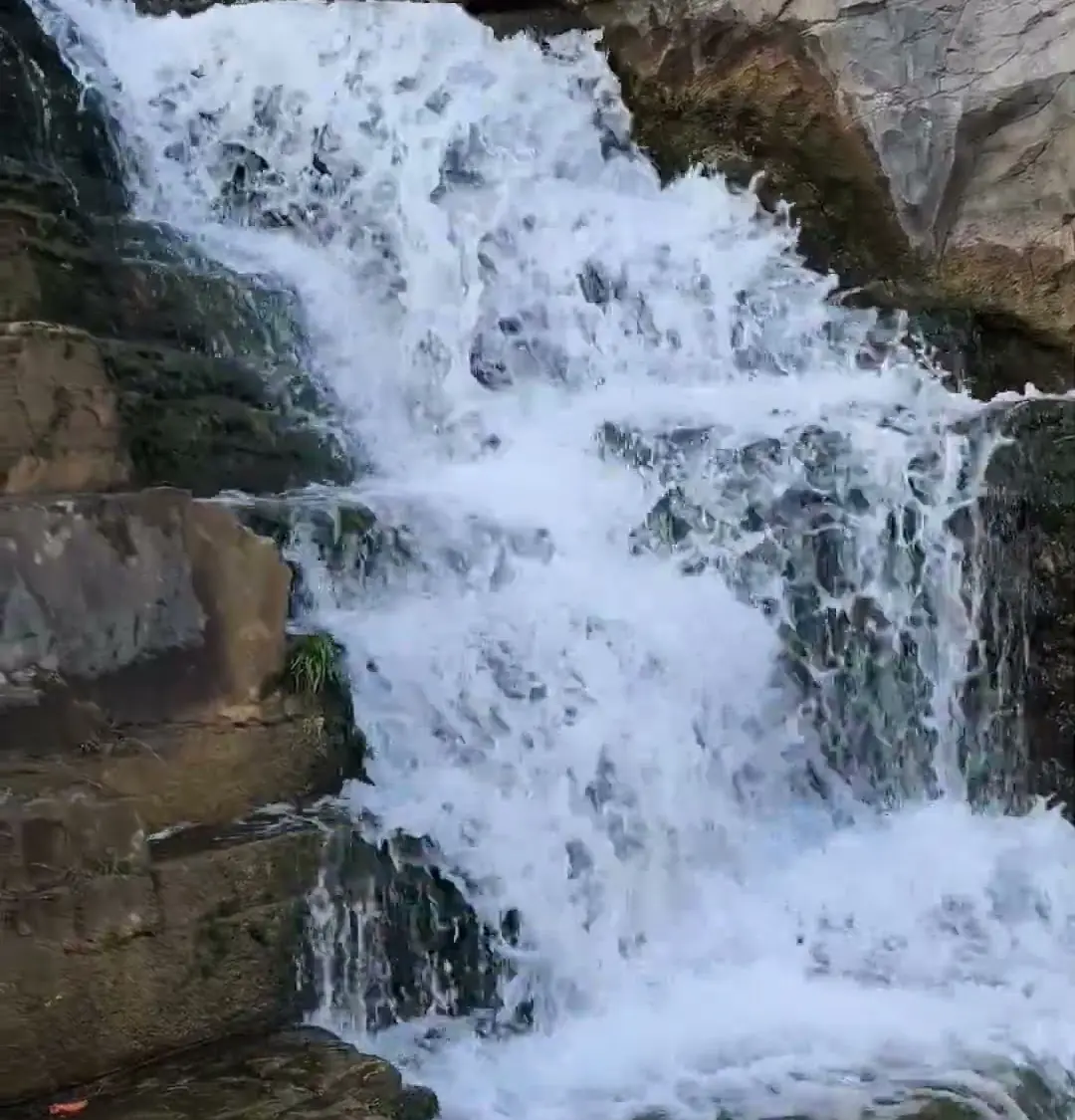
The National Botanical Garden of Georgia — its official name since 2011 — lies in the historic part of Tbilisi, in the gorge of the Tsavkisistskali stream, between 417 and 714 metres above sea level. The main entrance is at the end of Botanical Street, at the foot of Narikala Fortress. The stream cuts the garden in two: here it runs through a narrow gorge several tens of metres deep, its sides overgrown with every kind of greenery, and drops in a tall, lovely waterfall; further on it curves around the rocky crest of Narikala, passes through Abanotubani and flows into the Mtkvari.
It began as a royal garden. A garden of ornamental and medicinal plants in the lower part of the gorge, at Leghvtakhevi, is attested from the early seventeenth century. In 1671 the French traveller Jean Chardin described it, in 1701 Joseph Pitton de Tournefort wrote of the gardens by Narikala Fortress, and in 1735 Prince Vakhushti marked them on his map of Tbilisi. In 1795, during the Persian invasion, the garden was pillaged, but early in the nineteenth century it came back to life. After Georgia was joined to Russia it belonged to the treasury, was called the Tiflis State Garden and for a time was leased out; in 1845 it was given the status of a botanical garden.

Then the garden grew. Between 1896 and 1904 it spread westwards. In 1909–1914 a tunnel was dug through the Sololaki Range to make a second entrance, from what is now Lado Asatiani Street; later it was closed and turned into a nightclub. By 1914 a reinforced-concrete arch bridge, designed by the engineer N. Rotinov, had been thrown over the waterfall — one of the first structures of its kind in the Russian Empire, and today one of the garden's sights. And in 1910–1914 the botanist, archaeologist and Caucasus scholar F. I. Gorepekin, wanting to set up a section of Caucasian alpine plants in the garden, carried some fifteen hundred living plants down on his own back from mountain heights of more than four kilometres.
Between 1932 and 1958 the garden took in an old Muslim cemetery on the right bank of the Tsavkisistskali, on the north-eastern slope of Mount Tabori. Some of the graves survive, among them that of the Azerbaijani writer Mirza Fatali Akhundov. The poet Mirza Shafi Vazeh lies here too, as do statesmen of the Azerbaijan Democratic Republic, Fatali Khan Khoyski among them.

The garden is more than a place to walk: it is an important centre for the study of Caucasian botany. Many researchers of the region's plant life have worked here, and the first Georgian botanists — Kanchaveli, Kemularia-Natadze, Ketskhoveli, Menabde and others — began their scientific careers here. Since 1876 the garden has published a collection of scientific papers, and as part of the Millennium Seed Bank project a regional seed bank for the Caucasus has been set up here. The collections are laid out by geography: rare and endemic plants of the Caucasus, medicinal plants of Georgia, trees and shrubs of the Mediterranean, Colchis, North America, China and Japan, and the Himalayas; there is a rose garden and a lilac garden, and tropical and subtropical plants grow in the greenhouse. And within the garden, patches of eastern Georgia's own wild nature have been kept — riverside forest, open woodland, thorny scrub and steppe.


