
Videos from here


The story of the place
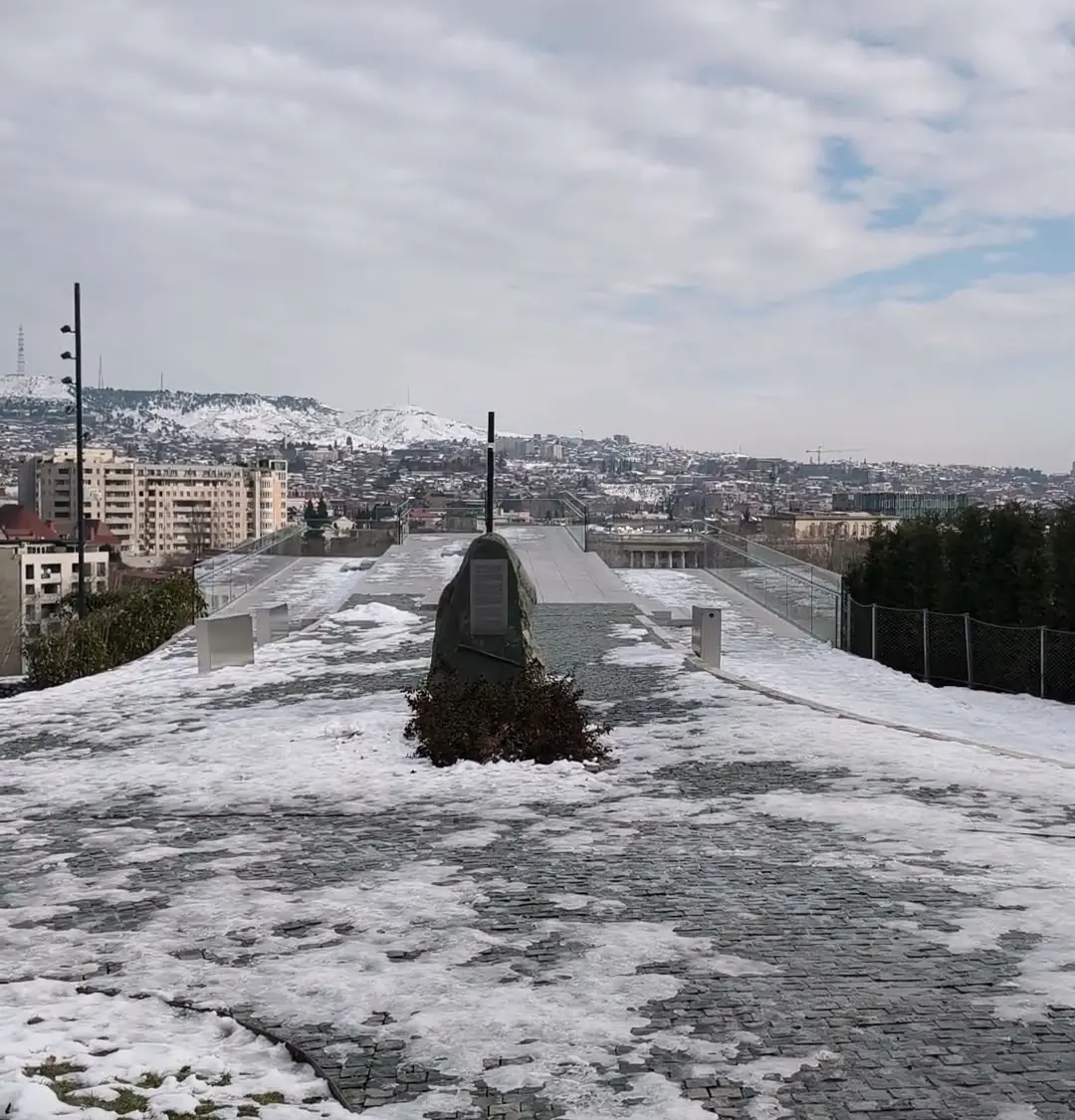
Vere Park, or the Vere Garden, is a small garden in Tbilisi's Vera district, on the right bank of the Mtkvari, where Kostava and Nikoladze streets meet.
In the old days the gardens of the king and queen, of the royal princes, of the city's mamasakhlisi, its headman, and of the Bishop of Tbilisi lay here, and gardens ran from the Lurji Monastery down to where the little Vere River flows into the Mtkvari. Later part of the gardens was given over to a cemetery.

In 1898, when the city had already built over most of Vere, the city authorities, with the consent of the Exarch of Georgia, closed the cemetery and began to lay out a garden. A few graves remained: those of the writer Daniel Chonkadze, the first in Georgian literature to speak out against serfdom, and of his wife, of his friend Lavrenti Ardaziani and of others. Alyosha, Aleksandra and Simon Japaridze, among the founders of Georgian mountaineering, are buried here too.
In Soviet times the garden was named after Sergei Kirov. Work on it began in 1933 to a design by the landscape agronomist A. Machavariani, and it opened on 18 July 1934. The entrance and central square were laid out in the French style, the parterre beds were filled with seasonal flowers and tall shrubs, and from 1961 to 1972 the flowers were planted in the patterns of Georgian ornamental stone carving, chukurtma. In 1936 a monument to Kirov was put up here.
Meanwhile the garden was shrinking. Until 1940 it covered 5.3 hectares together with its surroundings, but the apartment blocks built along the Mtkvari and on the slopes in 1936–1939 cut it down to 2.8. Yet in the 1950s–1970s it had more sports grounds than ever: the mountaineers' club was joined by halls for basketball, volleyball, boxing and gymnastics, and in 1973 the Chess Palace rose where the tree nursery had been.
In 1989 the Kirov monument was taken down and the garden became the Vere Garden again. The parterre with its Georgian ornament gave way to the pool of the Philharmonic's air-conditioning system, leaving 1.2 hectares of green. Yet 62 kinds of trees and shrubs grow on it — Himalayan cedar and Eldar pine, Caucasian lime, oriental and western plane trees, Japanese pagoda tree, oleanders and roses. The garden has a statue of Ekvtime Takaishvili (1993) and a bust of Merab Kostava (1999).


