
Videos from here




The story of the place
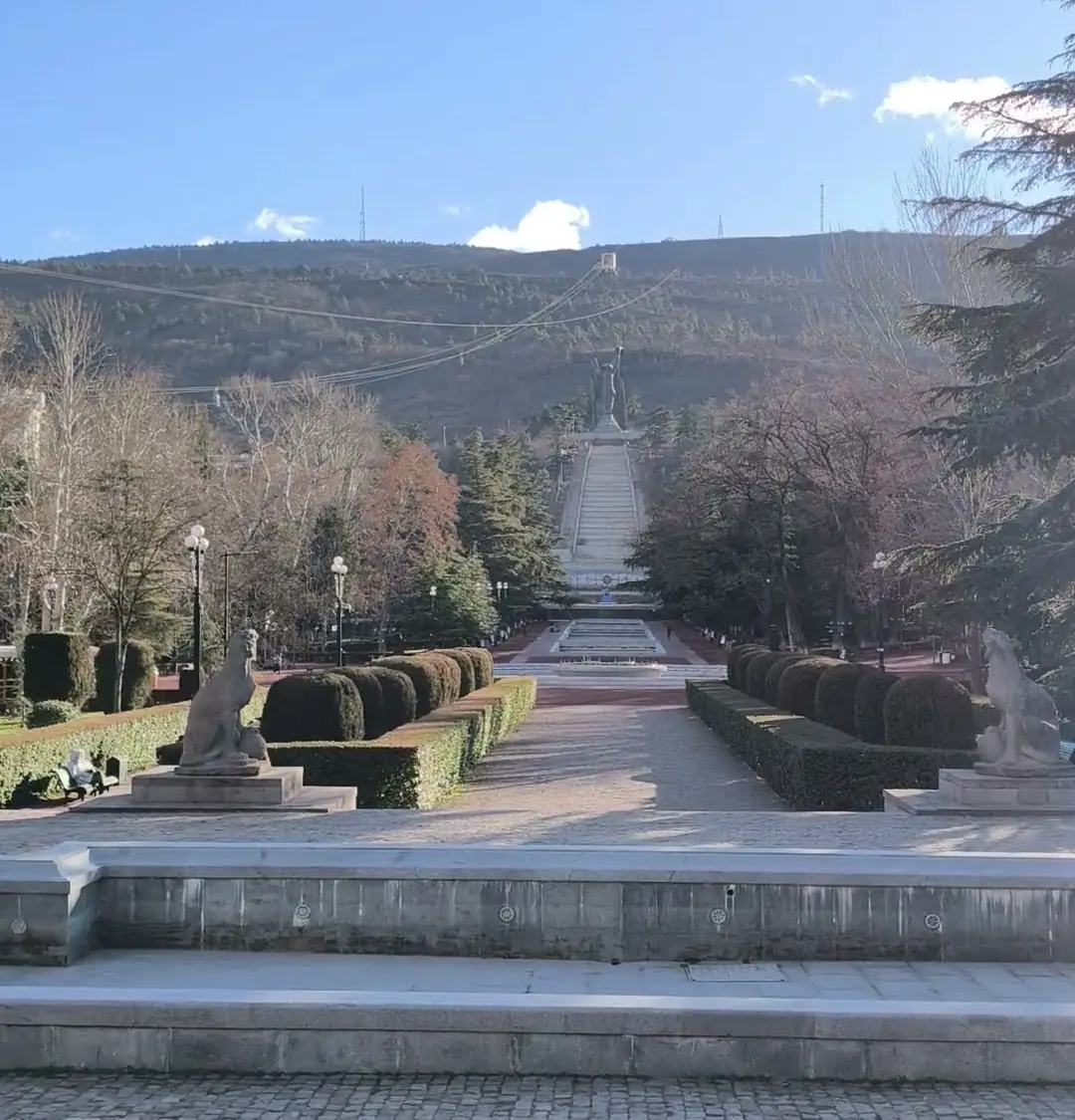
Vake Park is a large park in Tbilisi's Vake district, laid out after the war on a slope of the Trialeti Range, where gliders took off in the 1930s. From the north, from Ilia Chavchavadze Avenue, the district's main street, a broad staircase leads down into it, for the avenue stands seven metres above the park. The middle of the park is formally planned, along a main axis from which the paths fan out like rays, while its edges are given over to an arboretum of conifers, broadleaf trees and evergreens.
- Ilia Chavchavadze Avenue
Once this was a bare, stony hillside where, as a newspaper later put it, not even grass grew. In the spring of 1935 the Tiflis aero club of Osoaviakhim — the Society for the Assistance of Defence, Aviation and Chemical Construction — took it on and decided to set up a large glider field here, near the Students' Town: a field from which gliders, light aircraft without an engine, take off. The place suited it: a broad level ground ringed by terraces and hills of different heights, and gliding cannot do without hills. A hangar for three gliders was to be built, with a room for the gliding circles' classes, and a mass Komsomol subbotnik, a day of volunteer work, was called for 6 April to clear the field. Osoaviakhim itself, a Soviet civil-defence society founded in 1927, taught people in its circles and clubs to shoot, to parachute and to fly gliders and planes; later its successor was DOSAAF.
On 12 May an air festival of the aero clubs of all Transcaucasia was held at the glider field. From the morning trams and buses brought ever more people, and a crowd in its Sunday best filled the terraces around the field; members of the Georgian government came too, among them Filipp Makharadze. The festival opened with a parade of young model-aircraft builders, but a strong wind kept the models from flying, and the record attempts were called off. Then five gliders rose over the field: the glider pilots from Yerevan flew best, and Mikheil Tsabareishvili of Tiflis gave an exemplary flight and landing. All the while a hot-air balloon hung over the field, and at the end instructor pilots from Baku, Yerevan and Tiflis flew aerobatics in light planes. An "air train" from Yerevan was expected too: a plane towing a two-seat glider; such a train was the first in Transcaucasia to cross the mountains by the hardest route. It landed at Tiflis airport in good time, but its dispatch to the glider field was delayed, and that part of the festival had to be cancelled.
Ten years later, in 1945, the city's chief architect Zakaria Kurdiani wrote that work had begun on a large park for physical culture and sport on the site of the former glider field. It was laid out to a design by the architect Kuchu Dgebuadze and the dendrologist Neli Tsitsishvili, and for thirty-five years, from 1946 to 1981, the planting was directed by the landscape agronomist G. Mrulishvili. Rocks had to be blasted, ravines filled in and soil made anew on the stony ground; hundreds of thousands of trees and shrubs were planted, and even mature trees were moved here successfully — it became the largest greening project Tbilisi had seen. And on 1 May 1951, on the hillside where not even grass had grown before, a park of 125 hectares opened.
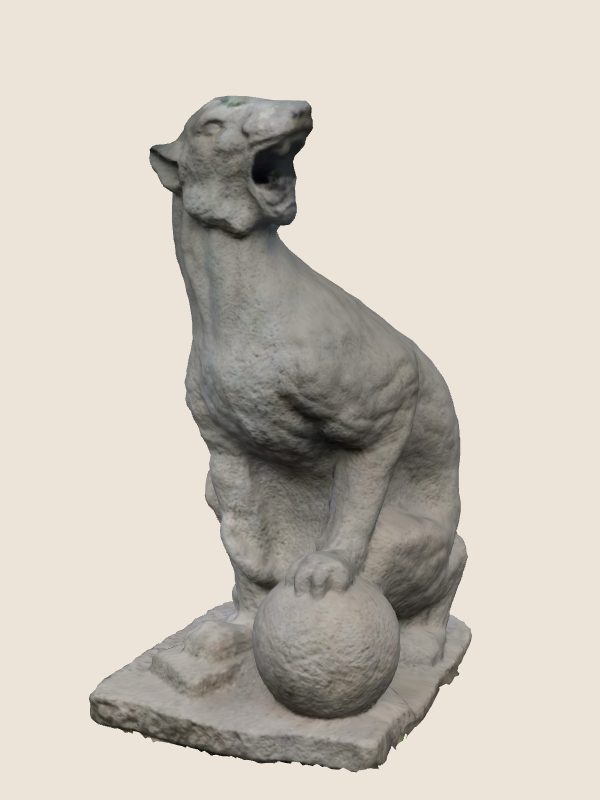
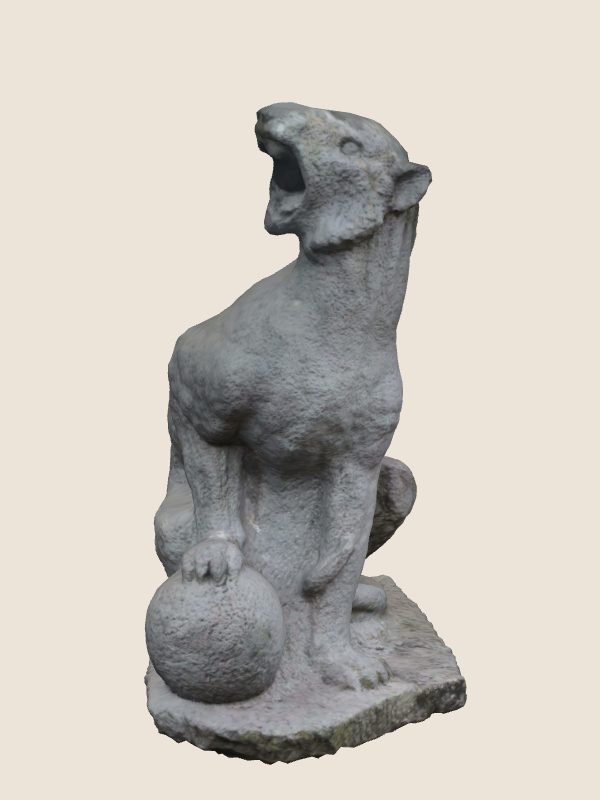
At the main entrance, where the main avenue of the park begins, stands a pair of stone tigers by the sculptor Ivane Pataridze; according to Georgia's tourism portal, they were set up here in 1948. They are a changed version of his own composition: another pair of tigers stands at the entrance to the Tbilisi Zoo. Pataridze was born in 1903 in Kutaisi, graduated from the Tbilisi Academy of Arts in 1928 and from the architecture faculty of the construction institute in 1931, and was counted among the most gifted pupils of Iakob Nikoladze. In 1937, after a denunciation, he was exiled for many years, and it badly undermined his health; he died in 1952. Most of his works have not survived — only a few animal sculptures carved in stone remain.
In 1956 a 25,000-seat stadium was built next to it, to the south-west, to a design by the same Dgebuadze; it was called Burevestnik, was also Lokomotiv, and now bears the name of the footballer Mikheil Meskhi. The park itself opened as Vake Park. According to the Georgian Encyclopedia it was named Victory Park in 1957, according to the Tbilisi Architecture Archive in 1981, when the Memorial of Glory opened here; it kept that name until 1992. The memorial rose on the park's main axis: a cascade of fountains, the Tomb of the Unknown Soldier and a 28-metre female figure, the symbol of Victory (sculptor Giorgi Ochiauri; architects Vladimer Aleksi-Meskhishvili, Kiazo Nakhutsrishvili and Otar Litanishvili). Later some of the memorial's sculptures were destroyed and others moved elsewhere.

In 2011–2014 the park was thoroughly rebuilt. It is a city park: since 1997 it has been run by the Vake Park company, answerable to Tbilisi City Hall. But a plot in its middle, where a restaurant had stood since 1958, came over time into private hands, and in 2013 City Hall allowed a multi-storey hotel to be built on it — building in the park is forbidden, and an exception was made for it. Residents protested: they held demonstrations, spent nights in tents by the building site and went to court. Almost six years later Mayor Kakha Kaladze announced that the city had reached an agreement with the investor and there would be no hotel: the plot would be bought from him or exchanged.
Today the park has children's rides, an open-air cinema, cafés and restaurants. Higher up, on one of the summits of the Trialeti Range, lies Turtle Lake: a cable car climbs to it from Chavchavadze Avenue, people go there in summer to walk and swim, and the ruins of a watchtower stand nearby.
Sources:
- Wikipedia (ka): Vake Park
- Wikipedia (ru): Vake Park
- Wikipedia (ru): Osoaviakhim
- Kommunisti, 5 April 1935, No. 81 (National Parliamentary Library of Georgia)
- Kommunisti, 14 May 1935, No. 111 (National Parliamentary Library of Georgia)
- Kommunisti, 1 May 1951, No. 102 (National Parliamentary Library of Georgia)
- Tbilisi Architecture Archive: Vake Park
- Georgian Encyclopedia: Vake Park
- OC Media: Environmental activists celebrate win in 6-year battle against Vake Park hotel
- Wikipedia (ka): Ivane Pataridze
- Georgia Travel: Vake Park


