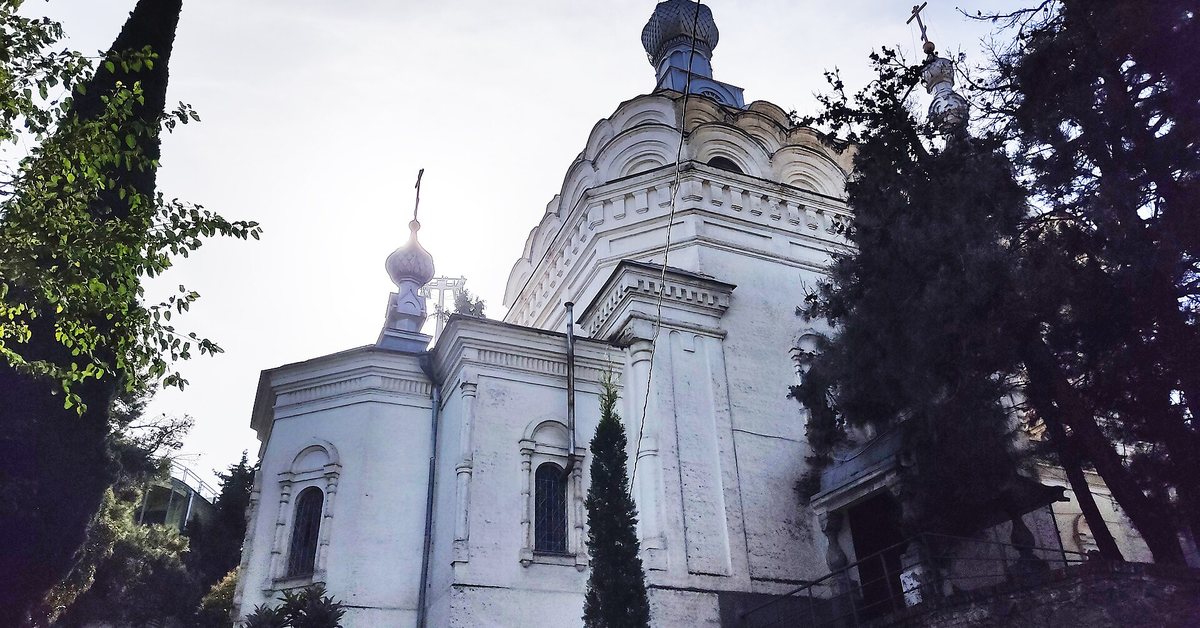
German Tbilisi
Swabian colonies, a Lutheran church and beer
In 1843, 362 colonists gathered to leave Katharinenfeld for Jerusalem – and when Cossacks blocked their way, they knelt and prayed for a miracle.

In 1817–1819 more than two and a half thousand Swabians came to Georgia from Württemberg. Around Tiflis they founded colonies: two right by the city, on the left bank of the Kura, and several more in the valleys around – among them Katharinenfeld, today's Bolnisi, and Elisabethtal, today's Asureti. The colonists brewed beer in Tiflis, brought butter and milk to its markets, planted vineyards and built churches. In 1941 it was decreed that they be deported to Kazakhstan. The church on today's Marjanishvili Square was pulled down after the war by German prisoners of war, but in Bolnisi and Asureti the colonists' houses and churches still stand, and in Tbilisi services are held in German again – in the Church of Reconciliation, built on the old German cemetery.
Walking route
The places on the map can be seen in one walk, for instance in this order.
- Site of the Church of Sts Peter and Paul: the church itself is gone and a plaque marks the site; Aghmashenebeli Avenue, once Neu-Tiflis, runs past it
- ≈ 770 m · 11 minChurch of Reconciliation
Distances and times are approximate, in a straight line between the points; along the streets the way is a little longer.
Timeline
- 1817 The first Swabians reach Tiflis
- 1818–1819 The colonies around Tiflis are founded
- 1826 The raid on Katharinenfeld
- 1843 Cossacks stop the march to Jerusalem
- 1850 The first brewery in the colony at Kukia
- 1851 Leo Tolstoy lodges in the German colony
- 1854 The church of Katharinenfeld is consecrated
- 1871 The church of Elisabethtal is built
- 1890s The new Church of Sts Peter and Paul is built
- 1918 German troops enter Tiflis
- 1933 Pastor Mayer is killed in Moscow and the church closed
- 1941 The decree to deport the Germans of Georgia
- 1945–1947 Prisoners of war pull down the church
- 1990s The Church of Reconciliation is built
Swabians bound for Ararat
Those who left Württemberg in 1817 were radical Pietists. Because they had broken away from the Lutheran state church, they were called Separatists. What drove them was the belief that the end of the world was near. The theologian Johann Albrecht Bengel had calculated that the last days would begin in 1836, and the writer Johann Heinrich Jung-Stilling wrote of a 'place of refuge' where the chosen would gather – and that place was sought near Mount Ararat.
The place of refuge was to lie between the Black and the Caspian Seas, near Mount Ararat.
But need drove them too: years of failed harvests and hunger. How much weighed faith and how much hunger, the sources judge differently. The Association of Germans of Georgia, Einung, writes that of the colonists who came in 1817–1820, 53% gave hunger as their reason and only 21% religious hopes.
Tsar Alexander I gave them leave to settle in May 1817. Down the Danube, by way of Odessa and the Caucasus, 2,629 people reached Georgia in 1817–1819. The first colonists arrived in Tiflis in 1817, and within two years several colonies had grown up around the city.
Sources (7)
- A. Groß, «Mission und Endzeiterwartung in Katharinenfeld», Georgica 21, 1998
- N. Sheitnishvili, «Von Katharinenfeld bis Bolnisi», Georgica 36, 2014
- Википедия (de): Kaukasiendeutsche
- Реестр памятников Грузии: бывшая лютеранская церковь в Болниси
- Ассоциация немцев Грузии «Айнунг»: немецкие колонисты в Грузии (груз.)
- Г. Манджгаладзе, «Германские колонисты в Закавказье», 1974 (груз.)
- Грузинская энциклопедия: Евангелическо-лютеранская церковь
Two colonies by the city
Right by Tiflis the Swabians founded two colonies. Fifty-one families of craftsmen settled in what was then the suburb of Kukia – where Aghmashenebeli Avenue runs today. This colony was called the Tiflis colony, or Neu-Tiflis. Twenty-three farming families, meanwhile, were given crown land further north, in Didube, and named their colony Alexandersdorf, after the emperor.
The Germans kept the city fed. The colonists near Tiflis brought milk and butter to market, and their butter sold for twice the price of Russian or Georgian; they sold bread and potatoes too. Kukia saw the first breweries in Transcaucasia: in 1850 Mader opened a small one, in 1865 Getzel opened one brewing Bavarian beer, and soon two more followed in the same colony, Dietrich's and Gutbrod's.
In November 1851 the young Leo Tolstoy took lodgings in the colony. He wrote to his aunt that he was living 'à la colonie allemande', a charming spot surrounded by gardens and vineyards, and paying five silver roubles a month for two rooms. Ill, he spent two months indoors and wrote here the first part of his first story, Childhood.
The city soon swallowed Neu-Tiflis. The road through the colony became Mikhail Avenue, in 1918 Plekhanov Avenue, and since 1988 it has been Davit Aghmashenebeli Avenue. In 2009–2011 the city restored dozens of houses along it. But of the colonists' own houses, the restorer Nestan Tatarashvili writes, hardly any remain. What is left of the colony are the gardens inside the blocks, now small parks, and the streets around the avenue, as Sopo Gelava writes, still follow the outlines of the German gardens.


Alexandersdorf
on the mapAlexandersdorf stayed a village for longer. Of all the colonies, only its farmers traded vegetables and fruit at the Tiflis market – being close to the city helped. Between the village's two streets stood a church of its own, dedicated to St Paul. In the First World War the village was renamed Aleksandrovskoye, in 1918 it got its old name back, in 1923 it became Liebknechtsdorf, and around 1938 it was taken into Tbilisi. The church was first turned into a store and then pulled down when a tramline was laid. But on Samtredia and Tskaltubo streets some two dozen colonists' houses and a wall of the German school still stand.
Sources (10)
- Г. Манджгаладзе, «Германские колонисты в Закавказье», 1974 (груз.)
- Грузинская энциклопедия: Колонисты
- N. Tatarashvili, «Tbilisi's German Settlements», Tbilisi Architecture Network, 2020
- С. Гелава, «Немецкие сёла, потерянные в Тбилиси», Blue Shield Georgia, 2016 (груз.)
- О. Димитриченко, «Александерсдорф — потерянная немецкая деревня», 2017 (груз.)
- Википедия (ka): проспект Давида Агмашенебели
- Мэрия Тбилиси, 23.11.2011 (груз.)
- П. Бирюков, «Биография Л. Н. Толстого», т. 1, 1905
- Л. Толстой, «Дневник 1847—1854»
- Georgian Encyclopedia: Tolstoy Lev
The church on Mikhail Avenue
on the mapThe heart of Neu-Tiflis was the Lutheran Church of the Apostles Peter and Paul. The Germans called it the Kirche, and the street beside it took its name from it, Kirochnaya – today's Marjanishvili Street. A first, small church stood here by 1850, when a school opened beside it. In the 1890s a large church in the Neo-Gothic style was built and consecrated in its place. Who built it, the sources tell differently: the Georgian Encyclopedia names the architect as Otto Simonson, Sopo Gelava as Leopold Bielfeld, and Nestan Tatarashvili writes that the design was Simonson's and Bielfeld oversaw the building.

The end of the German congregation began long before the war. In the early 1930s services were banned in Tiflis and the senior pastor, Richard Mayer, was arrested; in 1933 he was killed in Moscow and the church closed. After the war German prisoners of war pulled it down. The Georgian Encyclopedia gives 1945, the Lutheran church's own history and the plaque on the site 1946, and the exhibition of Ilia State University and the National Archives of Georgia 1946–1947. Its materials went into a block of flats built on the same spot. In 2013 a plaque in memory of the church was put up on it.
Here stood in 1897–1946 the Evangelical Lutheran town church built by Tiflis citizens of German descent.

Sources (10)
- Г. Манджгаладзе, «Германские колонисты в Закавказье», 1974 (груз.)
- Википедия (ka): лютеранская церковь Петра и Павла
- Грузинская энциклопедия: Евангелическо-лютеранская церковь
- N. Tatarashvili, «Tbilisi's German Settlements», Tbilisi Architecture Network, 2020
- С. Гелава, «Немецкие сёла, потерянные в Тбилиси», Blue Shield Georgia, 2016 (груз.)
- Ausstellung «Deutsche Siedler in Georgien (1817–1941)», Tafel 15
- Ausstellung «Deutsche Siedler in Georgien (1817–1941)», Tafel 17
- Ausstellung «Deutsche Siedler in Georgien (1817–1941)», Tafel 18
- Evangelisch-Lutherische Kirche in Georgien: Unsere Kirche – Vergangenheit und Gegenwart
- Netgazeti, 8.09.2013 (груз.)
Katharinenfeld
The largest colony was founded twice. In November 1818, 135 families came to Shamkhor, in today's Azerbaijan, but within a year 256 people died there. They were then given land sixty kilometres south-west of Tiflis, and in 1819 the colony rose again – where the town of Bolnisi stands today. It was named Katharinenfeld after Queen Catherine Pavlovna of Württemberg, the sister of Alexander I.
In August 1826, during the war with Persia, horsemen raided the colony and laid it waste. The missionary Saltet drew up a list of names the following year: of 431 inhabitants, 15 had been killed and 141 carried off as captives. The naturalist Friedrich Parrot, who came here in 1829, wrote of 30 killed and 130 carried off. Where the survivors found shelter, they also tell differently: according to Andreas Groß, in Tiflis and Alexandersdorf for about a year; according to Parrot, in Elisabethtal.
The march to Jerusalem
Katharinenfeld was also a centre of the Separatists. In 1842 a comet appeared in the sky, and many took it for a sign from God. Anna Barbara Spohn, whom the Separatists held to be a prophetess, announced that in a dream she had been commanded to go to Jerusalem, and set the exodus for Pentecost 1843. The governor sent Cossacks, but 362 people gathered in Katharinenfeld. On the morning of 4 June the emigrants and the Cossacks stood ready. When Spohn stepped out of her house and the Cossacks barred her way, her followers fell to their knees and prayed for a miracle. None came, and the families went back to their homes under Cossack guard. By the following year no Separatist groups were left.
Bolnisi today
The colony grew rich on wine. Around 1900 its two thousand inhabitants made almost two million litres of wine and over a hundred thousand litres of brandy. The church was consecrated in 1854, in the middle of the Crimean War. Under Soviet rule Katharinenfeld became Luxemburg, after Rosa Luxemburg, and during the Second World War, Bolnisi. The church still stands, on Merab Kostava Street: without its tower and with extensions, as a sports hall. The German houses line the streets of the quarter around it. On the site of the German cemetery in the town centre a memorial to the colonists was unveiled in 2001, and in 2020 a museum opened in Bolnisi whose last hall is given to the Germans.


Sources (11)
- N. Sheitnishvili, «Von Katharinenfeld bis Bolnisi», Georgica 36, 2014
- Википедия (de): Bolnissi
- A. Groß, «Mission und Endzeiterwartung in Katharinenfeld», Georgica 21, 1998
- Википедия (de): Kaukasiendeutsche
- А. Сонгулашвили, «Хозяйственный быт и традиции немцев Грузии», 2009 (груз.)
- Goethe-Institut Tiflis: Deutsche in Georgien – Kooperativen und Kolchosen
- Реестр памятников Грузии: бывшая лютеранская церковь в Болниси
- Georgia Travel: немецкий квартал в Болниси
- Википедия (ka): Болниси
- Agenda.ge, 19.05.2020: Bolnisi Museum
- OC Media, 1.08.2022: Bolnisi Museum
Elisabethtal
Elisabethtal was founded in 1818–1819 in a valley south-west of Tiflis. In 1871 the colonists built a Gothic church on the main street. By tradition it was designed by the Tiflis architect Albert Salzmann. In the 1930s the church was closed and made into a village club, and in 1953 its bell tower was pulled down. Today the village is called Asureti – its old Georgian name. Along the main street stand the colonists' matching white stone houses, and outside the village lies the German cemetery with the date 1884 on its gate; its 25 gravestones have been gathered together and no longer mark the actual graves.
Asureti has a wine of its own, too. The German winegrower Schall found a vine in the forest, and it came to be called 'Schall's grape'; since 1930 the variety has been called Asuretuli. Whether it was an old Georgian variety gone wild or Schall bred a new one is not settled; Georgian scientists hold it to be an old Georgian variety. In 1931 a large winery was built near Asureti to a design by the engineers Mayer and Pauer.


Another colony, Alexandershilf, was founded in 1857 high in the mountains near today's Trialeti; its church of grey basalt, from 1906, survives too.
Sources (8)
- Реестр памятников Грузии: церковь в Асурети
- Реестр памятников Грузии: кладбище в Асурети
- Реестр памятников Грузии: марани в Асурети
- Реестр памятников Грузии: лютеранская церковь в Триалети
- N. Sheitnishvili, «Von Katharinenfeld bis Bolnisi», Georgica 36, 2014
- Georgia Travel: Asureti Village
- Г. Манджгаладзе, «Германские колонисты в Закавказье», 1974 (груз.)
- Goethe-Institut Tiflis: Deutsche in Georgien – Die Schalltraube
War and deportation
The First World War made the colonists enemies. The colonies were given Russian and Georgian names: Alexandersdorf became Aleksandrovskoye, Katharinenfeld Yekaterinovka, and from November 1915 state headmen were put over the colonies to watch the colonists. But in 1918 German troops under General Kress von Kressenstein entered Tiflis, and the colonists' rights grew still wider. A German newspaper, the Kaukasische Post, had been published in Tiflis since 1906; its editor was Arthur Leist.
In 1927 Georgia had 13 German colonies with 9,253 inhabitants, and in the early 1930s 4,200 Germans lived in Tbilisi. On 8 October 1941 the State Defence Committee decreed that 23,580 Germans be moved from Georgia to Kazakhstan. Only German women married to non-Germans were allowed to stay. Georgian women married to Germans had to choose between divorce and deportation.
Sources (7)
- Г. Манджгаладзе, «Германские колонисты в Закавказье», 1974 (груз.)
- Wikipedia (en): German Caucasus expedition
- Грузинская энциклопедия: Колонисты
- Википедия (de): Kaukasische Post
- Постановление ГКО № 744сс от 8 октября 1941 года
- Грузинская энциклопедия: Евангелическо-лютеранская церковь
- Ausstellung «Deutsche Siedler in Georgien (1817–1941)», Tafel 18
Prisoners of war
on the mapA few years later other Germans came to Georgia – as prisoners of war. In March 1946 there were 26,000 of them here. Several camps were run from Tbilisi, and in Saburtalo a hospital for sick prisoners worked from 1945 to 1949. In the winter of 1945–1946 the prisoners died in their hundreds. According to the researcher Ana Margvelashvili, the prisoners built many buildings in Tbilisi, Rustavi and Chiatura. Which houses in Tbilisi they built, the sources do not say; the one thing certain is that they pulled down the church on Mikhail Avenue.
Saburtalo has a cemetery of German prisoners of war: 3,873 of them are buried here. In 1998 the German War Graves Commission (Volksbund) laid it out anew and set up a tall granite cross inscribed 'Resting place of German prisoners of war 1941–1945'.
The Church of Reconciliation
on the mapAfter 1991 the Germans who had stayed in Georgia and those who came back gathered again. Gert Hummel, a theologian from Saarbrücken, sold his house in Germany and with the money and with donations built a Lutheran church in Tbilisi, with a parish centre and an old people's home. The church went up in the 1990s on the former German cemetery, on the left bank, and was named the Church of Reconciliation; in 1999 Hummel became the first bishop of the Evangelical Lutheran Church in Georgia. In the church garden a stone remembers the German colonists and their descendants.
In memory of the dead of the German colonists and their descendants.

In 2016–2017, for the bicentenary of the settlement, the former colonies got signs with their German names – Katharinenfeld, Elisabethtal, Alexandershilf, then Neu-Tiflis and Alexandersdorf. And in Asureti, Stalin Street was renamed Swabian Street.
Sources (7)
- Википедия (de): Evangelisch-Lutherische Kirche in Georgien und dem Südlichen Kaukasus
- Википедия (de): Gert Hummel
- Википедия (ka): Ассоциация немцев Грузии «Айнунг»
- Википедия (ka): Евангелическо-лютеранская церковь в Грузии
- Evangelisch-Lutherische Kirche in Georgien: Unsere Kirche – Vergangenheit und Gegenwart
- Московская немецкая газета, 24.09.2026
- Kaukasische Post, März 2019, S. 3