
Videos from here
-
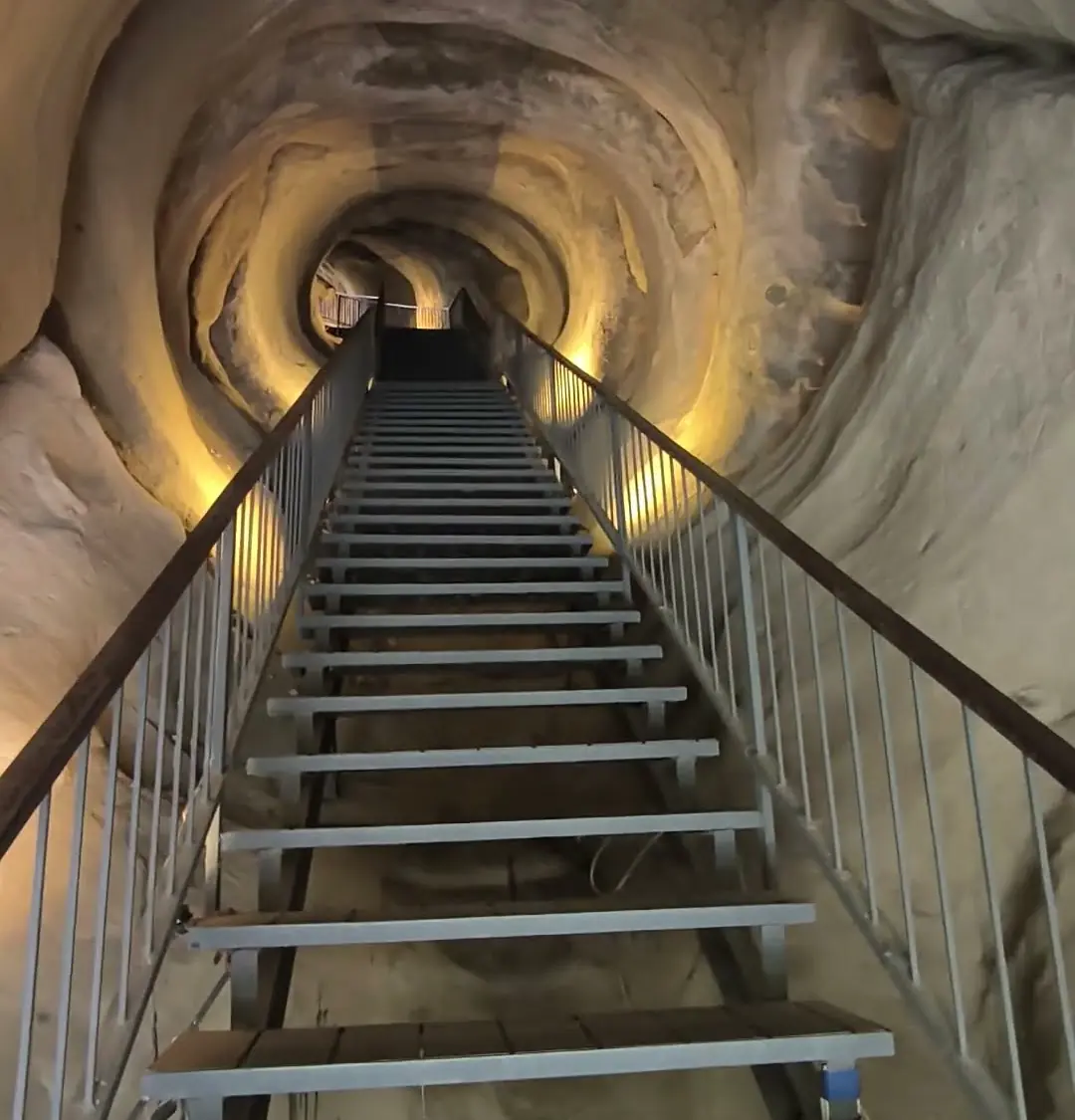
 Walking down an ancient secret tunnel 🕯️ Uplistsikhe, Georgia
-
 A lonely giant tree near Uplistsikhe 🌳 Georgia
-
 The view from a 3,000-year-old cave city ⛰️ Uplistsikhe, Georgia
-
 A whole town was carved into this rock 🪨 Uplistsikhe, Georgia
-
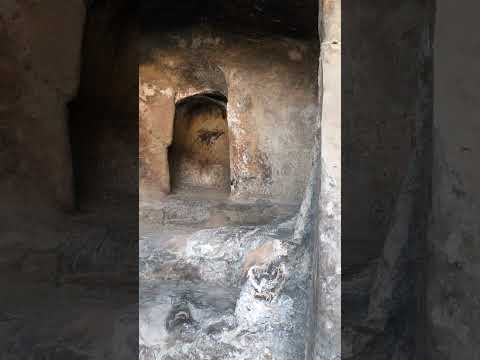 Named after a queen who never lived here 👑 Uplistsikhe, Georgia
-
 Two quiet minutes under a giant tree 🌳 Uplistsikhe, Georgia
-
 That church on the rock is over 1,000 years old ⛪ Uplistsikhe, Georgia
-
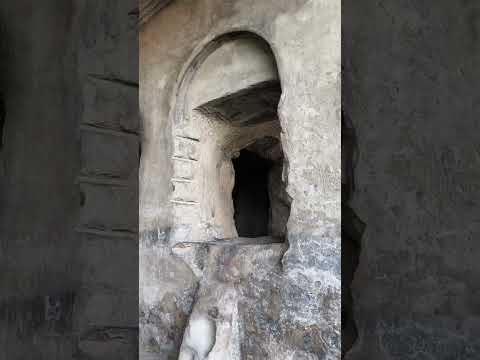 Named after a queen who never lived here 👑 Uplistsikhe, Georgia
-
 Even 19th-century tourists couldn't resist ✍️ Uplistsikhe, Georgia
The story of the place
Uplistsikhe is a town carved straight into the rock on the left bank of the Kura, some ten kilometres east of Gori. It is one of the oldest settlements in the Caucasus. Its name means "the lord's fortress": this is where the upali, the head of the union of the tribes of Upper Kartli, had his seat. Medieval Georgian chroniclers credited its founding to Uplos, son of Mtskhetos.

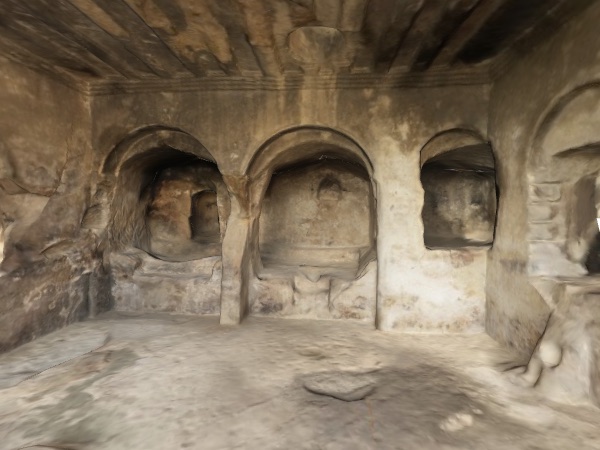
First there was a sanctuary. At the turn of the second and first millennia BC, after a great fire on the neighbouring hill of Katlaniskhevi, the area's pagan holy place moved onto this rock. A female sun deity was worshipped here, and her sign was the wheel. In antiquity the sanctuary grew into a town: temples, houses, streets and gates were cut into the sandstone. Scholars call Uplistsikhe the temple city of Iberia and compare it with Delphi in Greece. The stonecutters reproduced in the rock what is usually built of wood: ceiling beams, columns, coffers. In one large hall the semicircular vault is covered with octagonal coffers carved right into the stone.

The town had a secret way out: a tunnel cut through the rock down to the Kura. The historian Vakhushti Bagrationi saw it in the 18th century and wrote of "a great tunnel driven through to the river Kura". Water was brought to the town through stone pipes from a spring almost five kilometres away, and a deep well was fed from the Kura; scholars believe its water was sacred.
The wine here was sacred too. Grapes were brought from afar and carried up the slope to the wine press, and the great wine store, the "Great Marani", held 58 huge kvevri jars.
The pagan town ended with paganism. In 337 Christianity became the state religion of Georgia. The priests of Uplistsikhe were persecuted, the Temple of the Sun on the summit was rebuilt as a church, and the Great Marani was wrecked: its jars were carried out and it was set on fire. The town became an ordinary fortress.
The Arabs gave it a second life. From the 9th century Tbilisi was in their hands, and Uplistsikhe became the chief town of Kartli: in the 9th and 10th centuries up to twenty thousand people lived here. Georgian kings, the princes of Kakheti, Armenian rulers and the Arabs fought over the town, and it changed hands again and again. In 975 Bagrat III began to rule here, and a few years later he united Georgia for the first time. Around then the brick church of Uplistsuli, "the Prince's church", with its three naves, was built on the summit. It still stands. One of the former pagan temples, turned into royal chambers, was still called "Queen Tamar's hall" by local people in the 19th century.
The end came slowly. In 1122 David the Builder freed Tbilisi, and the capital returned there. The Mongol invasions of the 13th century ended Uplistsikhe as a fortress. After that, villagers from around only hid in its caves from raids. After a strong earthquake in 1920 no one settled here again. Excavations have gone on since 1957. Of the town's more than seven hundred rooms, about one hundred and fifty survive, and they are open to visitors. Since 2006 Uplistsikhe has been a cultural monument of national importance, and since 2007 it has been on UNESCO's tentative list for World Heritage.


