Akhaltsikhe
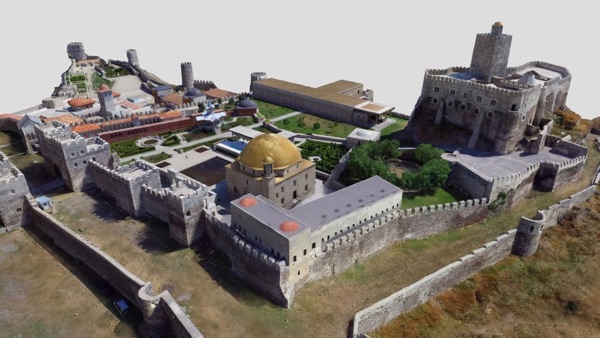
Rabati Fortress and a mosque after Hagia Sophia
Samtskhe-Javakheti · 2 videos
Videos from here

The story of the place
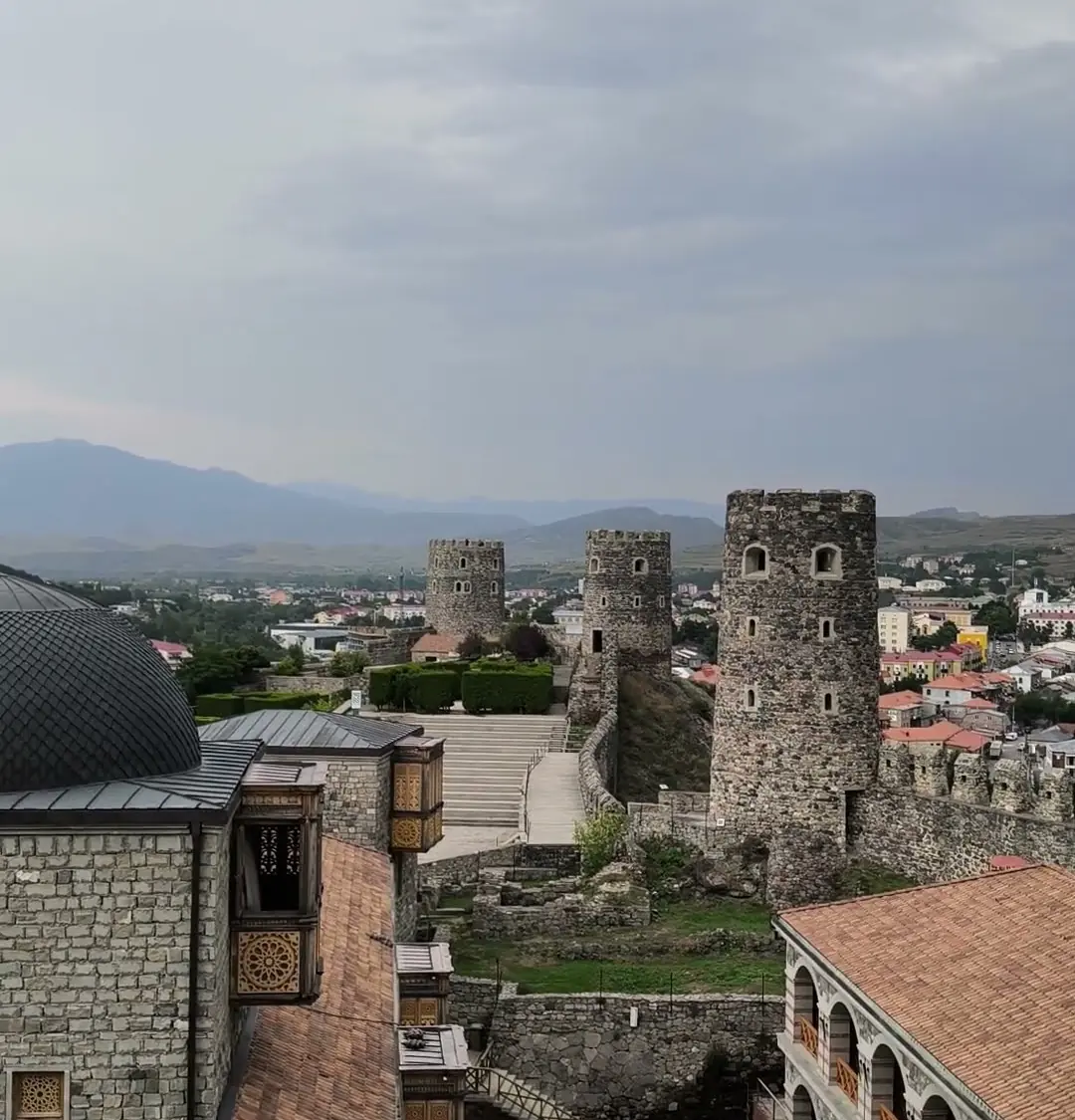
Akhaltsikhe is the main town of Samtskhe-Javakheti; it stands on the Potskhovistskali River, about a thousand metres up. Above it rises the Rabati fortress, once the capital of old Samtskhe and the seat of its atabegs. 'Rabat' used to be the name of the trading quarter by the fortress, where mostly Jewish merchants and craftsmen lived, but over time, and especially after the restoration, the name passed to the whole fortress.

The fortress's story begins in the 9th century. It was called Lomsia then, and according to the Georgian chronicles the town was founded by Guaram Mampali, son of the king of Tao. In the wars of the 11th century Lomsia was destroyed. Bashken II Jaqeli, whom David the Builder had charged with raising defences against the Seljuk Turks and restoring towns, set about rebuilding it, and in the 12th century the place took a new name — Akhaltsikhe, 'New Fortress'. The fortress became the seat of the Jaqeli family, and from the 13th to the end of the 14th century Akhaltsikhe was the capital of their domain, Samtskhe-Saatabago. In 1393 the armies of Tamerlane attacked the town, but the fortress held.
At the end of the 16th century the Ottomans seized Samtskhe, and from 1628 Akhaltsikhe was the centre of the Pashalik of Akhaltsikhe. The Jaqeli princes converted to Islam and now ruled the land as Ottoman pashas. In the 17th and 18th centuries the town was also one of the main markets where Christian captives were sold.
The best-known pasha of the family, Haji Ahmed Pasha, who ruled in Akhaltsikhe from 1747 to 1758, built a mosque inside the fortress, with a madrasa and a minaret. According to the military historian Vasily Potto, it was modelled on Hagia Sophia in Constantinople, its gilded domes shone above the maze of the fortress buildings, and he called its library one of the richest in the Muslim East. The pasha had a special raised place made in the mosque, but that right belonged to sultans alone; Constantinople took it as an insult to the sultan and condemned the pasha to death, and he submitted to the sentence. The townspeople, who revered him, kept his memory: two modest gravestones were set up in the mosque's courtyard, for him and for his wife, Aishe Khanum.
In 1828, during the Russo-Turkish War, General Ivan Paskevich took the fortress by storm, and under the Peace of Adrianople of 1829 Akhaltsikhe passed to Russia. The building remained a mosque until 1828; in 1850, by order of the emperor, it was consecrated to the Virgin Mary, and it served as a church until 1920. In the Crimean War, in November 1853, Russian and Georgian troops under Ivan Andronikashvili defeated the Ottomans near Akhaltsikhe.

In 2011–2012 the fortress was restored, with 34 million lari allocated by the Georgian government. The walls and citadel were renewed, along with the Orthodox church of the 9th–10th centuries, Ahmed Pasha's mosque with its madrasa and minaret, the baths and the Jaqeli palace, which now houses an exhibition hall of the Samtskhe-Javakheti History Museum; the tunnel leading down to the Potskhovistskali was restored too. The mosque's dome, painted terracotta in Soviet times, was gilded during the restoration, and Turkish architectural historians objected that the mosque had always been roofed with lead. The dispute was settled in early 2013, when after talks with Georgia's president Mikheil Saakashvili, Turkey's prime minister Recep Tayyip Erdoğan dropped his objections.