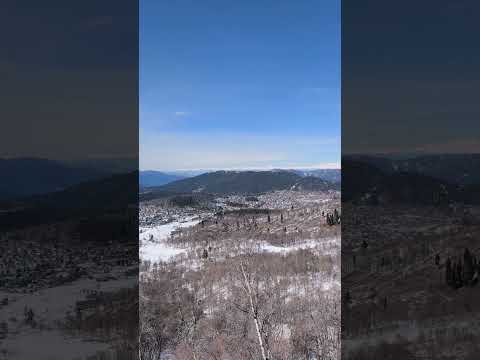
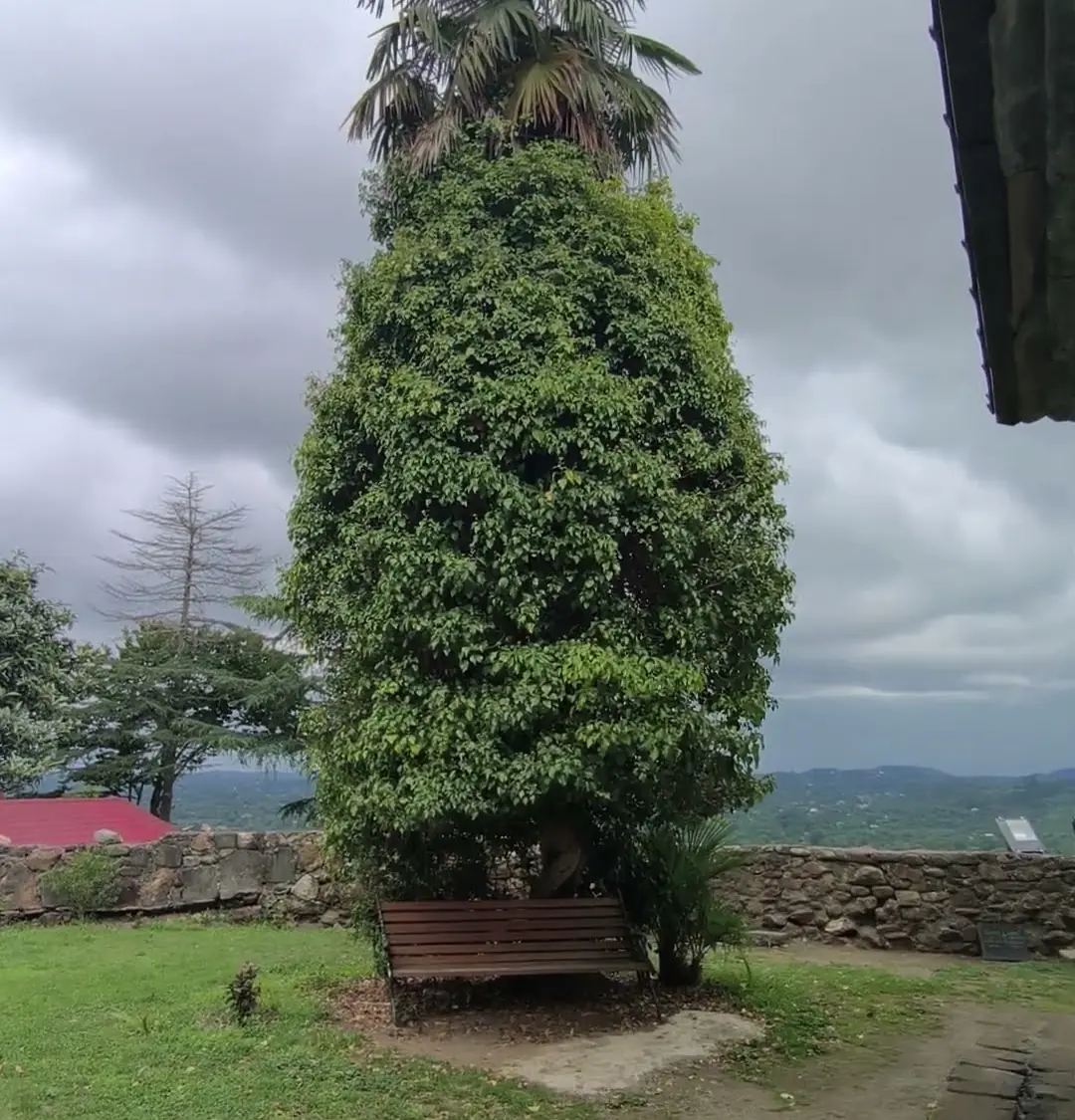
Videos from here


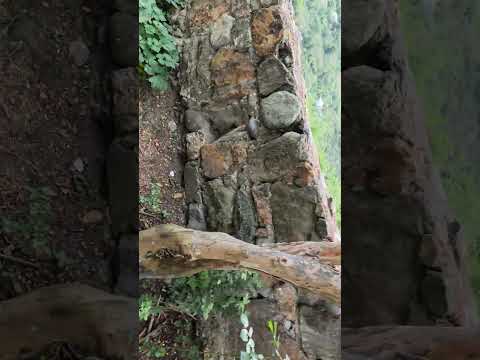

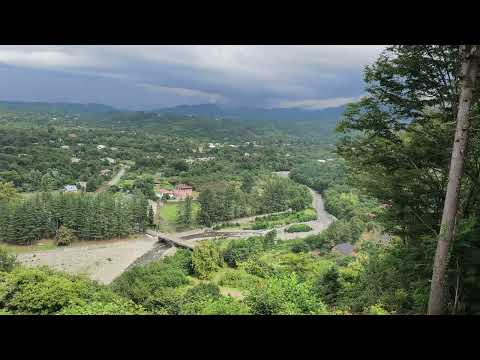

The story of the place
The monastery stands on a mountaintop above the Bzhuzhi River, seven or eight kilometres from Ozurgeti, in Guria. The main church rose at the very summit; lower down the slopes clung the monks' cells, and on the other side the nuns'. Today there are two churches built against each other, a bell tower and a fortress wall — a cultural monument of national importance.
For centuries the rulers of Guria, the Gurieli princes, were buried here; among the surviving tombs are those of Rostom Gurieli, buried in 1564, and of Mamia III, who died in 1714. As early as the late 15th century, under Kakhaber II Gurieli, Shemokmedi became the seat of a metropolitan, and on the wall of one of the churches Prince Mamia II Gurieli and his wife Tinatin were painted.
When the Ottomans seized Samtskhe, Prince Vakhtang Gurieli built a domed church here to shelter the treasures saved from Zarzma Monastery and its chief relic, the icon of the Transfiguration. The church was named after it, Zarzma; its walls are faced with bluish porphyry quarried right by the monastery, and the prince granted the monastery eighty peasant households. The monastery's treasury was counted among the richest in Georgia. At the end of the 17th century Bishop Iakob Dumbadze served here — in 1687 he travelled through Europe and met Pope Innocent XI.

Then troubles began. Putting down the uprising of 1820, General Velyaminov blew up the Shemokmedi fortress together with the monastery buildings inside its walls. In 1861 the monastery was robbed; the thieves were caught and some of the things returned. By 1875 old books lay neglected in boxes, the guards lit fires right inside the church, soot covered the frescoes and rain washed the paintings away. In 1881 the Tbilisi photographer Sabin-Gus took antiquities away 'for restoration' and never brought them back, and in 1919 treasures worth thirty million roubles were carried off, first to Batumi and then to the Ottoman Empire.