Videos from here


The story of the place
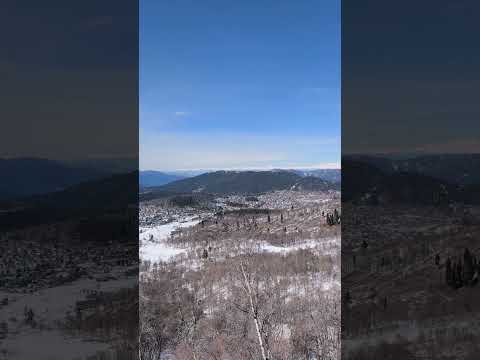
A resort town in the Borjomi Gorge, 800–900 metres up, where mountain streams run down into the Mtkvari and the slopes are covered in conifer forest to the very top. Here Borjomi water comes out of the ground — water of volcanic origin. It rises from a depth of eight to ten kilometres, pushed up by carbon dioxide, and has no time to cool on the way: it flows from the springs warm, at about forty degrees.
People were healing with it as early as the first millennium: in the 20th century seven ancient stone baths were dug up in the town, and near them medieval clay pipes that brought water to the springs. But the wars of the 16th to 18th centuries laid the gorge waste, the villages emptied, and the healing water was forgotten for almost three hundred years.
It came back by chance. In 1829 the Kherson Grenadier Regiment was stationed in Borjomi, and one day its soldiers came upon a spring in the forest, on the bank of the Borjomula stream. Colonel Popov, long troubled by a stomach ulcer, had it cleared and the water carried to the regiment. It helped him so much that he lined the spring with stone and built a bathhouse and a small house for himself beside it. A few years later the regimental doctor Amirov set about studying its composition and sent the first samples to St Petersburg and Moscow.
Its fame grew fast. In 1841 the chief administrator of the Caucasus, Yevgeny Golovin, brought his sick daughter here; what she suffered from is not known, but the waters helped her greatly. Her grateful father named the first spring after her, Yekaterininsky, and the second after himself, Yevgenyevsky. From 1846 Borjomi was the summer residence of the Viceroy of the Caucasus, Mikhail Vorontsov: houses, bathhouses, churches and hotels went up, and in 1850 a mineral water park was laid out around the springs. In 1854 the military hospital's pharmacist Zakharov filled the first bottles, some 1,300 oval half-litre ones, and took them to Tbilisi to sell.

The next viceroy, Grand Duke Mikhail Romanov, also spent his summers here, and in 1871 Borjomi, which had belonged to the Avalishvili princes, passed into his hands. For his son, Grand Duke Nikolai Mikhailovich, a palace with a large park and a greenhouse was built in neighbouring Likani — it still holds a table given to the Romanovs by Napoleon, an armchair that was a gift from the Shah of Iran, and a walnut table that Peter the Great made with his own hands. To light the palace, one of the first hydroelectric stations in the Russian Empire was started in 1898.

By then the whole empire knew the water. In 1894 the railway reached Borjomi — before that, the journey from Tbilisi took eight or nine hours of jolting in a phaeton — and Romanov began building a bottling plant in the park. Its bottles were blown by hand at a glassworks opened in 1896, and in 1900 the chemist Moldenhauer came up with charging the water with carbon dioxide so that it kept its properties on the road — and Borjomi went abroad. It won awards in Spa in Belgium, in Kazan and in Dresden, and in 1913 the plant turned out more than nine million bottles. In Soviet times Borjomi became Stalin's favourite resort, and its water a fixture at Kremlin receptions.