Videos from here
-
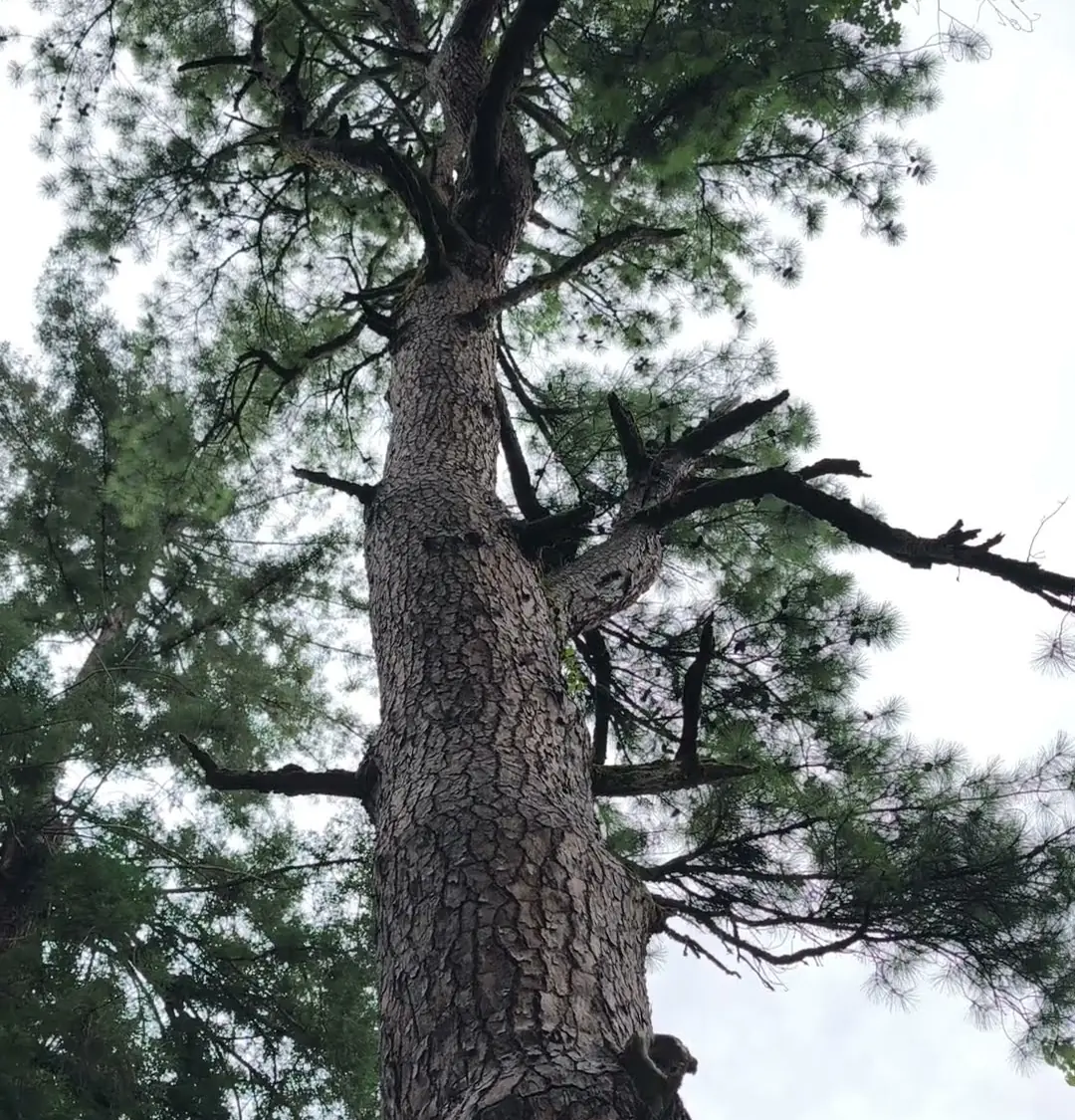
 Look up: Batumi Botanical Garden
-
 Black Sea
-
 A bamboo forest by the Black Sea 🎋 Tsikhisdziri, near Batumi, Georgia
-
 Every turn of this path is greener than the last 🌿 Batumi Botanical Garden, Georgia
-
 This flower is older than bees 🌸 Batumi Botanical Garden, Georgia
-
 One garden, nine corners of the world 🌍 Batumi Botanical Garden, Georgia
-
 Wild green meets the Black Sea 🌊 Batumi Botanical Garden, Georgia
-
 There's a turtle hiding in this pond 🐢 Batumi Botanical Garden, Georgia
The story of the place
Batumi is the capital of Adjara, Georgia's second city by population and a large port on the south-eastern shore of the Black Sea. It stands on Batumi Bay, a deep, well-sheltered natural harbour: on the whole Black Sea only Sevastopol's is deeper and handier, and here the water reaches 58 metres. The city takes its name from it: the Greeks called the bay 'deep', bathys. The climate is humid subtropical — warm, snowless winters and frequent downpours — and people swim in the sea from May to October.

These shores have been lived on since the turn of the second and first millennia BC. In antiquity the land around Batumi belonged to the Kingdom of Colchis; in the 2nd century, under the emperor Hadrian, a Roman military camp stood here, and in the 6th century the emperor Justinian built the fortress of Losorion, later called 'Tamar's Fortress'. Batumi then passed to the Kingdom of Abkhazia, from 1008 to the united Kingdom of Georgia, and when that broke apart, to the Gurieli princes. In 1444 the fleet of the Duchy of Burgundy tried to take and plunder the town, but Gurieli defeated the Burgundians.
In 1546 the Ottomans took Batumi. Rostom Gurieli won it back the same year, but after his death it fell to the Turks again. In 1807 the traveller Adrien Dupré found about two thousand people here, and Batumi looked more like a village: no fortifications, just a wooden tower by the market. The town could have become Russian with the Peace of Adrianople — the Ottoman Empire ceded the land up to the Chorokhi River, which reaches the sea beyond Batumi. But when the treaty and its map were drawn up, the rivers' names were mixed up, and the border was drawn not along the Chorokhi but along the Choloki, further north. The mistake was noticed only after the signing, when it was too late to reopen the matter — and Batumi stayed Ottoman.
Russia gained Batumi only after the war of 1877–78. The port was declared a free port — from 1878 to 1886 goods came in and went out duty-free — and the town grew at a rush: shops, houses, hotels, warehouses. In 1883 the railway arrived from Baku, and in 1897–1907 a pipeline linked the port to Baku. Caspian oil flowed abroad through Batumi, the companies of Rothschild, Nobel and Mantashev held sway, and in 1908 Batumi's cargo turnover was third in the empire, behind only St Petersburg and Odessa. The boulevard was conceived at the same time: the idea came from the military governor Smekalov, and the German gardener Rössler was invited to lay out the garden on the shore of Lake Nurigel, but he died in 1884 before he could finish. Today the boulevard runs along the sea for more than seven kilometres.


Not far from the city, at the Green Cape — Mtsvane Kontskhi — the Batumi Botanical Garden spreads over the hills above the sea, more than a hundred hectares. One of the first to plant trees from around the world here, near Chakvi, was the geographer and traveller Pavel Tatarinov: in 1892 he laid out a ten-hectare acclimatisation garden, today's 'Upper Park'. But the botanical garden itself was founded by Andrey Krasnov, a professor at Kharkov University, botanist and geographer. In the 1890s he led two large expeditions to South-East Asia, which brought back valuable plants, tea among them, and these were planted in a nursery at Chakvi. In 1912 Krasnov received permission to set up the garden and became its director; it opened officially on 3 November 1912. The land given to it, from the Green Cape to Chakvi, was then virgin forest of beech, chestnut and hornbeam, with an undergrowth of Pontic rhododendron and cherry laurel.
Krasnov was already gravely ill, yet he planned the garden himself: as a geographer, he set out to gather on these hills corners of the world's different subtropical regions. He died at the end of 1914, only two years after the opening, and is buried here. Iason Gordeziani did much for the garden: under him the Japanese, Chinese, Mexican, Australian, New Zealand and other sections appeared. In 1925 the garden was named the USSR's principal research institution for subtropical crops on the Black Sea coast of the Caucasus — tea and citrus above all. Today it has nine floristic sections, from the humid subtropics of Transcaucasia to the Himalayas, Mexico and the Mediterranean, and a carefully preserved ancient Colchian forest. From here the eucalyptus, the camphor tree, tung, feijoa, persimmon and the Washington navel orange spread out.